
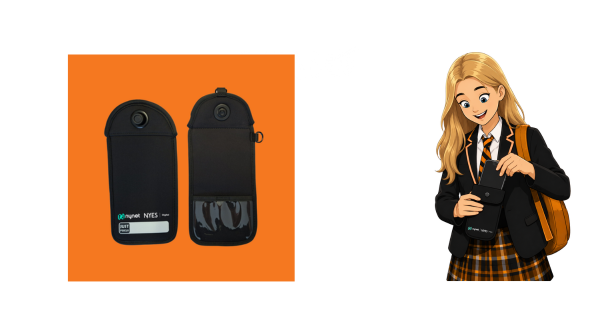
nynet supports schools across the UK with smartphone free solutions and we work in partnership with schools to plan and implement secure pouches.
National guidance, inspection expectations and sector consensus have now aligned: smartphones in schools are disrupting effective learning, student behaviour and wellbeing outcomes.
The Department for Education has made it clear that pupils should not have access to their phones during the school day. Ofsted has confirmed that, from April 1st 2026, they will assess how schools set, communicate, and consistently apply mobile phone policies and the impact of those policies on pupils.
While the guidance is non‑statutory, the direction of travel is clear. For MAT CEOs, headteachers, and senior leadership teams, the strategic question is no longer if change is coming, but how to implement it in a way that is robust, defensible, and sustainable.
Many schools operate mobile phone policies that rely on partial restrictions — phones in bags or pockets, not to be seen or heard.
Across the sector, these approaches are proving difficult to sustain:
Without a clear, shared boundary, accountability sits disproportionately with individual teachers rather than the system.
The Evidence from Schools Shows it Works
Schools that have adopted no‑smartphone‑on‑site approaches are seeing the strongest and most durable impact.
Removing smartphones from the school environment resets expectations and culture. The boundary is clear, consistent, and easily communicated to pupils and parents. Enforcement becomes straightforward, staff workload reduces, and behaviour and focus improve.
“Moving to a no‑smartphone‑on‑site policy completely changed the feel of the school. It isn’t just about lessons — it affects mornings, breaks and the journey home.” – David Smith, Headmaster, Fulham Boys School
“The biggest change is the culture shift, the norm is no longer early smartphone ownership” Maryanne Ramsbottom, Head of BHSA Junior School
“I wanted children to be free to interact face-to-face throughout the school day, building relationships with peers instead of being subject to content arriving in the classroom and playground through phones.”– Esther Ghey (campaigner & mother) on the impact of phones on social interaction.
“Phones were at the heart of every problematic issue at school. Now we have a full ban, teachers have more time to teach.” – Headteacher describing the impact of a whole school ban – The Times
“Before the pouches, we had issues with students sneaking off to the toilets to check their phones. Now we have far fewer disruptions in class. The children are significantly more engaged in their learning. Detentions, suspensions and expulsions are all down. I am certain results will go up this year.”
Headteacher at Astrea Academy Woodfields (Doncaster)
And the positive quotes build as schools adopt a robust solution to eradicate the use of Smartphones in school time. For trusts and leadership teams, this represents not only a safeguarding and wellbeing gain, but a structural improvement in how policy is experienced day‑to‑day.
Despite broad agreement on direction, cost remains the primary obstacle for many schools and education institutions. Moving to a fully smartphone‑free model is often viewed as another non‑budgeted pressure within already constrained school finances.
This has led many schools to delay action, despite recognising that more decisive change is inevitable.
Our smartphone‑free system is designed specifically to support trust‑wide and whole‑school adoption.
We work with MATs and schools to:
To address financial constraints, we offer cost amortisation over a two‑year period, enabling schools and trusts to spread expenditure and avoid significant upfront cost. This makes proactive implementation achievable within existing financial planning cycles.
Smartphone‑free schools are rapidly becoming the norm. Trusts and schools that act decisively are finding that clear system‑level solutions reduce pressure on staff, rather than add to it.
This is an opportunity to lead with confidence, support staff consistency, and align practice with the direction of national policy while managing cost.
We welcome an initial conversation to explore how a smartphone‑free system could be implemented within your school or trust. Contact us to discuss our solutions and how we work with you to overcome barriers to adoption
Call 01423 598 210 or email enquiries@nynet.co.uk